Introduction
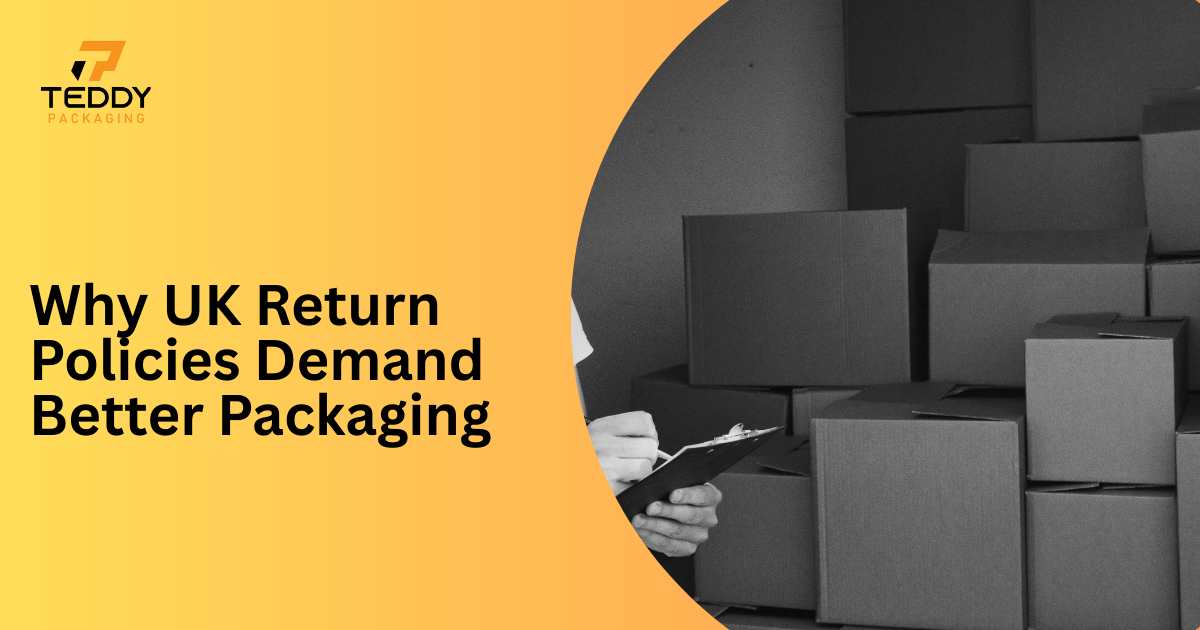
Returns have become a normal part of doing business in the UK, especially as online shopping and flexible refund policies continue to grow. What many businesses overlook is how much pressure this puts on their packaging. Boxes are no longer used once and discarded; they often need to survive delivery, customer handling, and the return journey back to the warehouse. This shift explains why UK return policies demand better packaging than ever before. When packaging boxes are not designed for reuse and durability, products arrive back damaged, costs rise, and customer trust weakens. Stronger, smarter packaging helps businesses manage returns efficiently while protecting both products and brand reputation.
1. The Reality of UK Return Culture
UK consumers expect simple, fast, and low-friction returns. This expectation puts pressure on packaging to perform beyond a single delivery.
When packaging fails during returns, businesses face losses that go far beyond refunds.
- High return rates in fashion and retail
- Consumer rights support easy returns
- Free return policies increase volume
- Packaging reused for reverse shipping
Packaging boxes must now be designed with returns in mind, not just the first delivery.
2. How Poor Packaging Increases Return Costs
Every return has a cost, and weak packaging multiplies that cost. Boxes that tear, collapse, or cannot be resealed often result in unusable returned products.
Returns caused by packaging damage are completely avoidable.
- Crushed boxes lead to product damage
- Torn packaging affects resale value
- Products returned unsafely increase waste
- Extra handling increases labour costs
Better packaging boxes reduce unnecessary losses during the return process.
3. One Way Packaging Does Not Work Anymore
Traditional packaging was designed for one-way travel, warehouse to the customer. UK return policies have changed that reality.
Packaging now needs to handle multiple handling points.
- Original delivery handling
- Customer repacking
- Courier return transport
- Warehouse inspection
Custom packaging boxes built for durability perform better across multiple journeys.
4. Customer Repacking Behaviour and Its Impact
Customers do not pack returns the same way warehouses do. Many returns fail because packaging assumes perfect repacking conditions.
Design must account for real customer behaviour.
- Boxes resealed incorrectly
- Missing internal supports
- Overstuffed or loosely packed items
- Original tape or seals removed
Smarter packaging design reduces damage caused by inconsistent repacking.
5. The Role of Box Strength in Returns
Box strength becomes even more critical during returns because packaging is often weakened after the first journey.
Weak boxes fail quickly once reused.
- Corrugated strength affects durability
- Edge crush resistance matters
- Strong corners support reuse
- Better board quality prevents collapse
Choosing the right packaging boxes protects products during both delivery and return.
6. Branding and Customer Trust During Returns
Returns are a sensitive moment in the customer relationship. Poor packaging during returns damages trust, even if the refund is smooth.
- Packaging still represents your brand during the return journey.
- Clean, intact boxes maintain professionalism
- Easy-to-reseal designs reduce frustration
- Branded packaging reinforces reliability
- A better experience improves repeat purchases
Custom packaging boxes help preserve brand image even during returns.
7. Sustainability Pressure and Return Packaging
UK consumers are increasingly aware of packaging waste. Return packaging that breaks or cannot be reused adds to environmental concerns.
Sustainable packaging must survive more than one use.
- Reusable box designs reduce waste
- Durable materials support sustainability
- Less need for replacement packaging
- Better alignment with UK eco expectations
Smarter packaging choices reduce both costs and environmental impact.
8. E-Commerce Returns and Packaging Performance
E-commerce returns involve more handling than standard deliveries. Packaging boxes must cope with conveyor systems, stacking, and repeated movement.
Return journeys are often harsher than outbound deliveries.
- Multiple courier touchpoints
- Longer transit routes
- Less controlled handling
- Increased vibration and compression
Packaging designed for e-commerce returns performs better and reduces losses.
9. Why Custom Packaging Boxes Outperform Standard Boxes
Standard boxes rarely account for return handling. Custom packaging boxes are designed with product fit, strength, and reuse in mind.
Customisation improves both protection and efficiency.
- A better fit reduces internal movement
- Stronger materials handle reuse
- Inserts protect during repacking
- Consistent sizing improves handling
For UK businesses with high return volumes, custom packaging becomes a necessity.
10. Working With the Right UK Packaging Partner
Packaging that supports return policies requires experience and planning. The right supplier understands how returns affect packaging performance.
UK-based suppliers design packaging for real market conditions.
- Knowledge of UK delivery networks
- Experience with e-commerce returns
- Guidance on reusable packaging design
- Reliable production and delivery
Businesses can explore durable packaging boxes designed for UK return systems at Teddy Packaging to reduce losses and improve customer satisfaction.
FAQs
Q1. Why do UK return policies affect packaging so much?
UK return policies often allow easy and free returns, which means packaging must survive both delivery and the return journey without damaging the product.
Q2. Can poor packaging increase return rates?
Yes. Weak packaging leads to product damage, resulting in avoidable returns even when customers did not intend to return items.
Q3. Are standard packaging boxes suitable for returns?
Standard boxes are typically designed for one-way shipping and often fail during return handling, especially when reused multiple times.
Q4. How does customer repacking impact packaging performance?
Customers repack items differently from warehouses, often removing inserts or sealing boxes incorrectly, which increases damage risk.
Q5. Do custom packaging boxes really reduce return-related losses?
Yes. Custom packaging boxes offer better fit, stronger materials, and improved durability, which helps protect products during returns.
Q6. Is return-friendly packaging more expensive?
It may cost slightly more upfront, but it reduces refunds, replacements, and waste, making it more cost-effective long term.
Q7. How does packaging affect brand trust during returns?
Packaging that arrives damaged during returns reflects poorly on the brand and can reduce the likelihood of repeat purchases.
Q8. Can sustainable packaging still handle returns?
Yes. Many eco-friendly materials are strong enough to support multiple uses when designed correctly.
Final Thoughts
UK return policies are designed to protect consumers, but they also place new demands on packaging. Boxes are no longer used once and discarded; they often need to survive multiple journeys, inconsistent repacking, and repeated handling. Packaging that fails during returns increases costs, creates waste, and damages brand trust.
Better packaging is not about over-engineering; it is about designing boxes that match real-world behaviour. Stronger materials, better fit, and return-friendly designs help UK businesses reduce losses and improve customer satisfaction. By working with experienced packaging partners and investing in smarter packaging boxes, businesses can turn returns from a problem into a controlled and manageable process.